
What a Skipped Fall Checkup Actually Costs You
Put this off and the bill usually doesn't show up until the first real storm of the season, right when you need the door to open. A spring that's been quietly rusting all through the dry months can snap the moment it's asked to lift a door heavier with trapped moisture. Weatherstripping that's cracked and brittle from a summer of sun and dust won't just let in a draft — it'll let in standing water that warps panels and seizes up a track. An opener with a dying battery backup will fail during a power outage, which in this area usually means during the exact storm that knocked the power out in the first place. None of this is expensive to prevent. All of it is expensive to fix after the fact, especially if a cheap repair turns into a full spring replacement or a new opener.
Why This Season Is Different Here
Garage doors in this part of the South Bay spend most of the year dealing with dry heat, dust, and the occasional wildfire smoke haze — conditions that dry out lubricant, stiffen seals, and pack grit into tracks and rollers. Then winter flips the script: rain moves in, humidity climbs, and anything near the coast picks up salt air that accelerates rust on hardware that's already been baking all summer. A garage door that limped through September on dried-out rollers and a little surface rust is not in good shape to handle wet weather. The transition between these two seasons is exactly when small issues turn into real failures, which is why late fall is the right time to get ahead of it rather than waiting until a door is already stuck.
The Pre-Winter Checklist
1. Inspect and Lubricate Moving Parts
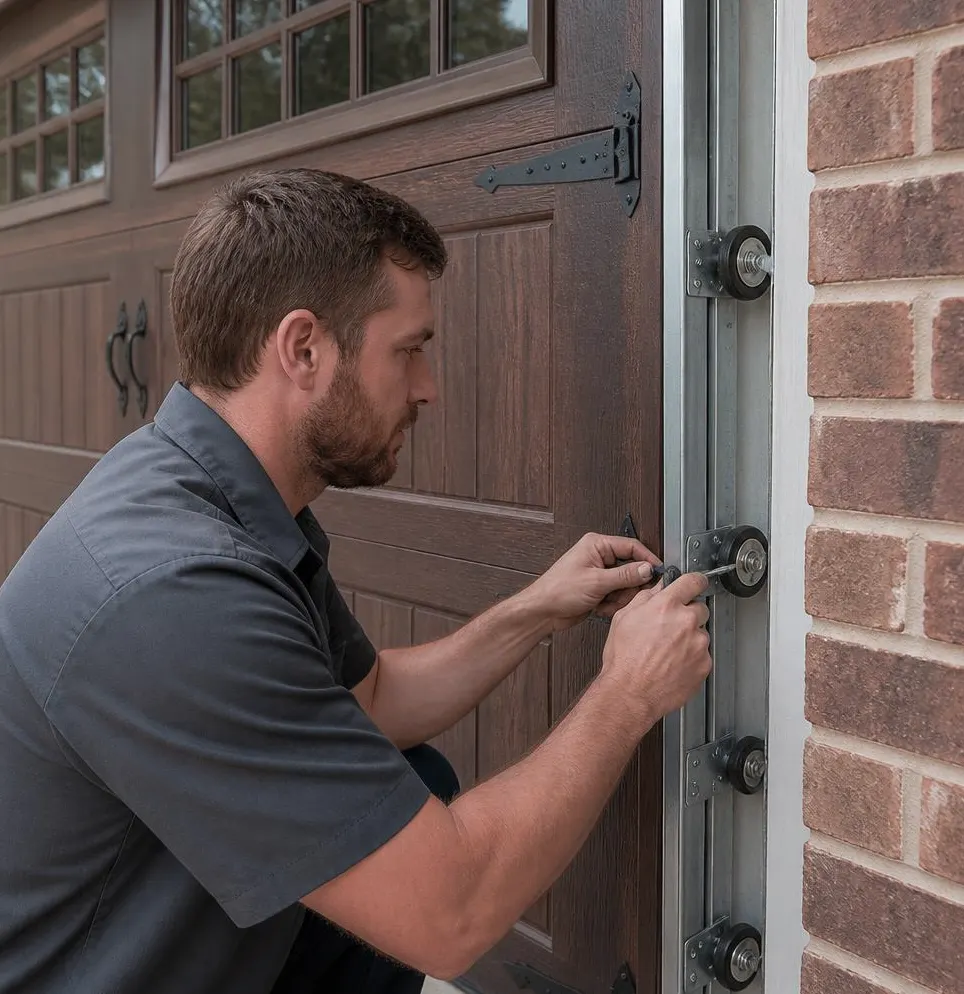
Rollers, hinges, and tracks that went through a dry summer are probably due for fresh lubricant. Use a silicone or garage-door-specific lubricant (not WD-40, which attracts dust rather than repelling it) on rollers, hinges, and the spring itself. While you're in there, look for rollers that are cracked, flat-sided, or wobbling in their brackets — those should be replaced before winter rather than after they fail.
2. Check the Springs Now, Not After One Breaks
Springs carry the full weight of the door, and surface rust accelerates once humidity picks up. Look for flaking rust, gaps between coils, or visible stretching. If the door feels heavier than usual when lifted manually (with the opener disconnected), that's a sign the springs are losing tension. Springs are under serious tension and are one of the few parts of a garage door genuinely dangerous to service yourself — this is a job to have inspected and replaced by someone with the right bars and clamps, not improvised with vice grips.
3. Replace Worn Weatherstripping
The rubber seal along the bottom of the door and the vinyl strips along the sides are the first line of defense against wind-driven rain. After a summer of UV exposure, they're often cracked, stiff, or pulling away from the frame. Fresh weatherstripping is a low-cost fix that keeps water, dust, and drafts out of the garage, and it protects whatever's stored against the walls — tools, boxes, sometimes a second refrigerator — from water damage.
4. Clear and Test Drainage Paths
Check the ground and threshold at the base of the door for debris, dried leaves, or dust buildup that accumulated over the dry months. If water has nowhere to go, it pools against the door and track, which speeds up rust and can warp wood or composite panels. A quick sweep and a look at the slope outside the door takes a few minutes and prevents a much bigger problem.
5. Test the Opener and Battery Backup
Run the door through a full open-close cycle and listen for grinding, hesitation, or uneven movement. Check that the safety reversal sensors are aligned and clean — dust from the dry season tends to build up on the sensor eyes and can cause false readings once humidity changes how light reflects off them. If the opener has a battery backup, test it now; a dead backup battery is only discovered during an outage, which is exactly when it's needed most.
6. Look at the Door Itself
Metal doors near the coast are especially prone to surface rust forming along seams, hinges, and the bottom panel where road salt and sea air settle. A light coat of rust-inhibiting primer and paint on any exposed metal now is far cheaper than replacing a corroded panel later. For older homes going through earthquake retrofit work, this is also a reasonable time to confirm the garage door track and header are still properly braced, since retrofit changes to the garage structure can shift how the door frame sits.
When It's Time to Call In Wilmington Overhead Door Co
If you're hearing grinding, seeing visible rust on the springs, or the door feels noticeably heavier or slower than it did over summer, that's the point to stop troubleshooting and get it looked at. Our Garage Door Maintenance & Tune-Up service covers the full inspection — springs, rollers, tracks, opener sensors, and weatherstripping — so nothing gets missed before the rain sets in. If a spring is already showing wear or has broken, our Spring Replacement service gets it swapped safely with properly matched hardware, not a mismatched spring that'll wear unevenly. We handle homes and businesses throughout Wilmington, San Pedro, Carson, Harbor City, Long Beach, Torrance, Lomita, and Compton, and we show up when we say we will.
Don't wait for a stuck door in the middle of the first storm. Call Wilmington Overhead Door Co today to get your garage door ready for winter.